


Country travel guide · International
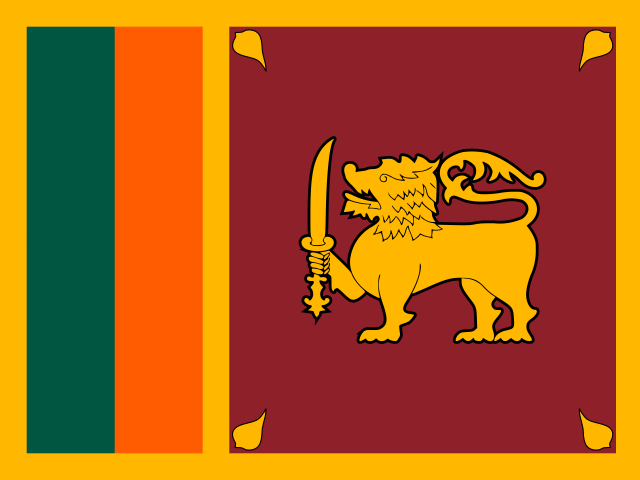 Sri Lanka
An island of ancient temples, misty tea hills and long golden beaches, just south of India.
Information added on 26 Oct 2026. Rules, fees and dates can change — for the latest information please visit the official websites below.

- Capital
- Sri Jayawardenepura Kotte
- Language(s)
- Sinhala, Tamil, English
- Currency
- Sri Lankan rupee (LKR)
- Time
- UTC +5:30
- Plugs
- Type D, G · 230 V
- Calling code
- +94
- Emergency number
- 119 (police)
- Tourist police
- 1912 (24-hour hotline)
About Sri Lanka
Sri Lanka is an island country in the Indian Ocean, separated from the south-east tip of India by the Palk Strait. It is about the size of Ireland or a little smaller. The centre has mountains and tea estates, the south and west have wet coasts and rainforest, and the north and east are drier, with flat plains and lagoons. The island has a long history of Buddhist kingdoms, and many ancient cities, stupas and rock fortresses still stand. Its people speak Sinhala, Tamil and English, and it has Buddhist, Hindu, Muslim, Christian and other communities.
Most visitors go to a small number of well-known places. Colombo, the largest city, is the commercial centre. Kandy, in the hills, is home to the Temple of the Tooth. Sigiriya is a rock fortress with old frescoes, and Anuradhapura and Polonnaruwa are major ancient sites. Nuwara Eliya and Ella are tea-growing hill towns with train routes through the mountains. Galle and the south coast are known for old Dutch forts and beaches, and the east coast has quieter sandy beaches.
Visa system
Visitors need permission to enter Sri Lanka. Many travellers apply for an Electronic Travel Authorisation (ETA) online before they fly, and some nationalities may have other options. Your passport should be valid for at least six months from your date of entry. Rules change from time to time, so check and apply only on the official website.
| Your passport | What you need | Where |
|---|---|---|
| India | Check current rules; an ETA may be required | eta.gov.lk (official ETA site) |
| Japan | Check current rules; an ETA may be required | eta.gov.lk (official ETA site) |
| South Korea | Check current rules; an ETA may be required | eta.gov.lk (official ETA site) |
| China | Check current rules; an ETA may be required | eta.gov.lk (official ETA site) |
| Other countries | Check your country's status on the official site | eta.gov.lk or your nearest Sri Lankan embassy |
Fees and rules can change, so confirm the current cost and conditions on the official immigration website. Be careful of unofficial websites that charge extra fees; use only the official site at eta.gov.lk.
Weather
Sri Lanka is tropical, so it is warm all year round. Rain patterns depend on the coast: the south-west gets monsoon rain from May to September, while the east and north are drier then. The north-east monsoon brings rain to the east from October to January.
| Jan | Feb | Mar | Apr | May | Jun | Jul | Aug | Sep | Oct | Nov | Dec | |
|---|---|---|---|---|---|---|---|---|---|---|---|---|
| Average high | 30° | 30° | 31° | 31° | 31° | 30° | 30° | 30° | 30° | 29° | 29° | 29° |
| Average low | 22° | 22° | 23° | 24° | 25° | 25° | 24° | 24° | 24° | 23° | 23° | 23° |
| Rain | Some rain | Dry | Some rain | Heavy rain | Heavy rain | Light rain | Light rain | Light rain | Some rain | Heavy rain | Heavy rain | Heavy rain |
Best time to travel
BestGoodRainy, very hot or very cold
- December – MarchThe south-west, hill country and Kandy are dry and sunny, which is the best time for most trips.
- May – SeptemberThe east and north coasts are dry and calm, but the south-west coast can have rough seas and rain.
- October – NovemberThe east coast gets heavy rain from the north-east monsoon, while the west and hills are often drier.
Food to try
Sri Lankan food is known for rice, coconut and spice. Vegetarian food is easy to find, and many restaurants serve dhal, vegetable curries and coconut sambols. Dishes can be very hot, so you can ask for less chilli.
- Rice and curryA plate of rice with several small curries, usually including dhal, vegetables and fish or chicken.
- Hoppers (appa)Bowl-shaped pancakes made from fermented rice flour and coconut milk, often eaten for breakfast.
- String hoppers (idiyappam)Steamed rice flour noodles shaped into small nests, usually served with curry and coconut sambol.
- Kottu rotiChopped flatbread stir-fried on a hot griddle with vegetables, egg or meat and spices.
- Pol sambolA spicy relish made from grated coconut, chilli, onion and lime, served with most meals.
- Ceylon teaBlack tea grown in the hill country, often served strong with milk and sugar.
Events & festivals
Many festivals follow the lunar calendar, so their dates move each year. Full moon days, called Poya, are public holidays. The Sinhala and Tamil New Year is fixed around 13 and 14 April.
- JanuaryDuruthu Poya — A full moon holiday marking an important visit by the Buddha, with temple ceremonies and processions.
- FebruaryNavam Perahera — A large procession in Colombo with dancers, drummers and decorated elephants.
- AprilSinhala and Tamil New Year — A national holiday with family gatherings, traditional games and special meals.
- MayVesak — A full moon festival with lanterns, lights and devotion across the country, especially in Colombo and Kandy.
- July – AugustEsala Perahera — A famous multi-night procession in Kandy with dancers, drummers and an elephant carrying a sacred casket.
- October – NovemberDeepavali — The Hindu festival of lights, celebrated with lamps, sweets and family meals, especially by Tamil communities.
- DecemberChristmas — A public holiday celebrated by Christian communities with church services and family meals.
How to prepare
- Passport & visaCheck the entry rules on the official site before you travel. Keep a copy of your passport and entry permission with you.
- MoneyThe currency is the Sri Lankan rupee. Cards are accepted in cities and larger hotels, but carry cash for small shops and rural areas.
- Phone & internetMobile SIM cards are sold at airports and shops and need your passport. Wi-Fi is common in cities and most hotels.
- HealthCheck vaccine advice with a travel health clinic before you go. Drink bottled or filtered water, and take insect repellent for mosquitoes.
- ClothesWear light, loose clothing. When visiting temples, cover your shoulders and knees and remove your shoes.
- Customs & etiquetteUse your right hand for giving and receiving things. Ask before photographing people, and dress modestly at religious sites.
- Getting aroundTuk-tuks are common for short trips, and trains are a scenic way to see the hills. Pre-arrange drivers for long journeys, as roads can be slow.
- Safety or permitsCrime against visitors is low, but take normal care with bags and valuables. Some sites require entry tickets, and beaches can have strong currents, so follow local warnings.
Official websites of Sri Lanka
For the latest rules and fees, always check these official websites. They open in a new tab.
Visa & entry
Department of Immigration and Emigration – ETAeta.gov.lkDepartment of Immigration and Emigrationimmigration.gov.lkTourism
Sri Lanka Tourism Development Authoritysrilanka.travelCulture & heritage
Central Cultural Fundccf.gov.lkDepartment of Archaeologyarchaeology.gov.lkWeather
Department of Meteorologymeteo.gov.lkHealth & safety
Ministry of Healthhealth.gov.lkSri Lanka Policepolice.lkInformation added on 26 Oct 2026. Written with the help of AI and checked by the Inditour team.
This page is general travel information, not legal advice. For the latest information, please visit the official websites of Sri Lanka.