

Country travel guide · International
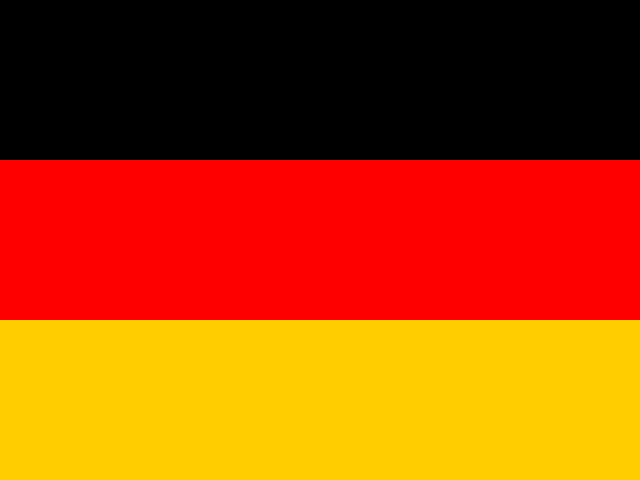 Germany
 is a country of historic cities, castles and forests at the heart of Europe, known for its engineering, beer and Christmas markets.
Information added on 26 Oct 2026. Rules, fees and dates can change — for the latest information please visit the official websites below.

- Capital
- Berlin
- Language(s)
- German
- Currency
- Euro (EUR)
- Time
- UTC +1 (summer UTC +2)
- Plugs
- Type C, F · 230 V
- Calling code
- +49
- Emergency number
- 112 (fire and ambulance)
- Police
- 110
About Germany
Germany lies in north-central Europe. It has flat plains in the north, low hills and forests in the centre, and the Bavarian Alps in the south. Rivers such as the Rhine and the Elbe run through the country, and it borders nine other nations. Berlin is the capital and largest city.
Germany has a long and complex history. It was divided into East and West after the Second World War, and the two halves were reunited in 1990. Visitors can see castles, cathedrals, medieval towns and modern museums. Culture is strong in music, literature, theatre and art. The main places visitors go to are Berlin, Munich and Bavaria, the Rhine valley, Hamburg, Cologne, Dresden and the Black Forest.
Visa system
Germany is part of the Schengen area, which shares one set of visa rules. Some visitors need a Schengen visa, while others can enter for short stays without one. Your passport should be valid for at least three months after your planned departure and issued in the last ten years. Apply only on the official website of the Federal Foreign Office or at the German embassy or consulate.
| Your passport | What you need | Where |
|---|---|---|
| India | Schengen visa needed | German embassy, consulate or visa centre in India |
| Japan | No visa for stays up to 90 days | Not needed for short stays |
| South Korea | No visa for stays up to 90 days | Not needed for short stays |
| China | Schengen visa needed | German embassy, consulate or visa centre in China |
| Other countries | Depends on your passport | Check the official Federal Foreign Office website |
Rules can change, and fees are set by the authorities, so check the latest details before you travel. Some websites look like official visa sites but are not, so only use the official Federal Foreign Office website at auswaertiges-amt.de.
Weather
Germany has a temperate climate with four clear seasons. Summers are warm and sunny, while winters are cold, grey and often wet, with snow in the mountains.
| Jan | Feb | Mar | Apr | May | Jun | Jul | Aug | Sep | Oct | Nov | Dec | |
|---|---|---|---|---|---|---|---|---|---|---|---|---|
| Average high | 3° | 4° | 8° | 14° | 19° | 22° | 24° | 24° | 19° | 13° | 7° | 4° |
| Average low | -1° | -1° | 1° | 4° | 8° | 12° | 14° | 14° | 10° | 6° | 3° | 0° |
| Rain | Some rain | Light rain | Light rain | Light rain | Some rain | Some rain | Some rain | Some rain | Some rain | Some rain | Some rain | Some rain |
Best time to travel
BestGoodRainy, very hot or very cold
- May – SeptemberDays are long and warm, and festivals, lakes and outdoor cafés are at their best.
- October – NovemberAutumn colours are lovely and crowds are smaller, but the weather is cooler and wetter.
- December – FebruaryChristmas markets are open and cities feel festive, but days are short and cold.
Food to try
German food is hearty, with lots of potatoes, bread, sausages and cheese. Vegetarian options are easy to find, especially in cities, and dishes are generally mild rather than spicy.
- BratwurstA grilled pork sausage, often served with mustard and bread, and a popular street food.
- Pretzel (Brezel)A soft, knot-shaped bread, often eaten fresh from a bakery with butter.
- SchnitzelA thin cutlet of meat, usually pork or veal, fried in breadcrumbs.
- KäsespätzleSmall egg noodles mixed with melted cheese and onions, a good vegetarian choice.
- SauerkrautFermented cabbage, served as a side dish with sausages and meat.
- Black Forest cakeA chocolate sponge cake with cream and cherries, from the Black Forest region.
Events & festivals
Many German festivals follow the lunar calendar, so their dates change each year. Carnival and Easter are two examples, while Oktoberfest and Christmas markets follow fixed patterns.
- FebruaryCarnival (Karneval) — A street carnival with parades, music and costumes, especially in Cologne and Mainz.
- FebruaryBerlin International Film Festival (Berlinale) — One of the world's largest film festivals, held in Berlin each year.
- March or AprilEaster — A spring holiday with markets, church services and family meals; dates follow the lunar calendar.
- June – JulyChristopher Street Day — Large pride parades and street events in Berlin, Cologne and other cities.
- Late September – early OctoberOktoberfest — A famous beer festival in Munich with music, food and traditional dress.
- October 3German Unity Day — A national holiday marking the reunification of Germany in 1990.
- Late November – DecemberChristmas markets — Traditional markets with lights, gifts, mulled wine and food in most towns.
How to prepare
- Passport & visaCheck whether you need a Schengen visa before you travel. Your passport should be valid for at least three months after you leave, and you should carry a copy.
- MoneyThe euro is used. Cards are widely accepted in cities, but some small shops and markets prefer cash, so carry some euros.
- Phone & internetMobile networks are good across the country. Buy a local SIM or use an international roaming plan, and check prices with your provider.
- HealthTravel insurance is strongly advised. Pharmacies (Apotheke) are common, and the emergency number is 112.
- ClothesDress in layers. Summers can be warm, while winters are cold, so bring a warm coat, gloves and waterproof shoes in cold months.
- Customs & etiquetteGermans value punctuality and order. Shops often close on Sundays, and it is polite to greet people with a handshake and a simple greeting.
- Getting aroundTrains are fast and reliable, and the Deutsche Bahn network connects most cities. Cities also have good tram, bus and metro systems.
- Safety or permitsGermany is generally safe. Keep your belongings close in crowds and at stations. Check official sites for any current rules before travelling.
Official websites of Germany
For the latest rules and fees, always check these official websites. They open in a new tab.
Visa & entry
Federal Foreign Officeauswaertiges-amt.deTourism
German National Tourist Boardgermany.travelCulture & heritage
Federal Government Commissioner for Culture and the Mediabundesregierung.deWeather
German Meteorological Service (DWD)dwd.deHealth & safety
Robert Koch Instituterki.deFederal Policebundespolizei.deEmbassies
Embassy of Germany, Tokyotokyo.diplo.deEmbassy of Germany, Seoulseoul.diplo.deEmbassy of Germany, New Delhinewdelhi.diplo.deInformation added on 26 Oct 2026. Written with the help of AI and checked by the Inditour team.
This page is general travel information, not legal advice. For the latest information, please visit the official websites of Germany.